How do house churches prevent heresy and stay grounded in sound doctrine? It is a fair question. A house church may not have a seminary-trained pastor, denominational oversight, or a formal teaching program. But those structures do not automatically ensure that church members understand or follow biblical teaching. The key is whether a church creates ways to hear, test, discuss, and live out Scripture together.
House churches are not immune to false teaching. Neither are large churches or established denominations. But small, participatory gatherings can offer important opportunities to notice confusion, ask honest questions, and help one another grow. Here are some reasons house churches can be well placed to encourage sound doctrine, along with five practical guardrails any church can use.
Does church structure prevent bad doctrine?
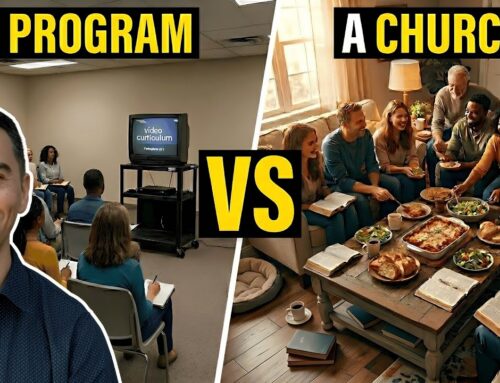
It is easy to assume that if a pastor preaches sound doctrine, the congregation believes it. But hearing a sermon is not the same as understanding or applying its message. In a large gathering, leaders may have few opportunities to find out what people actually believe, what they misunderstand, or what questions they are afraid to ask.
Research by Barna cited in this discussion found gaps between churchgoers’ stated beliefs and basic Christian teachings. For example, the survey results described included people who said the Bible was totally accurate while also rejecting or expressing uncertainty about beliefs commonly taught in Scripture. The details vary across groups, but the broader point is that church attendance and exposure to sermons do not guarantee a shared understanding of Christian doctrine.
Formal structures can also fall short. Denominations, seminaries, and trained clergy may provide valuable teaching and accountability, but none of them guarantees that every leader or member will hold to historic Christian beliefs. No denomination or church model is automatically protected from doctrinal error.
Why dialogue matters in a house church
A house church often has more space for conversation than a large service. Members can ask questions, explain what they understand, and respond to one another. That makes it easier for a group to notice when someone is confused or holding an idea that needs to be examined in light of Scripture.
This does not mean every small group is healthy or that discussion alone prevents false teaching. It means that participation can make beliefs more visible. When people have room to speak, leaders and fellow believers have a better chance to offer clarification and support.
Personal discipleship matters, too. A sermon may introduce a truth, but walking alongside someone over time can help them understand it, apply it, and work through obstacles. Jesus’ call to make disciples is not limited to delivering information; it involves helping people learn to obey what he taught.
What disciple-making movements can teach us
Disciple-making movements in parts of Africa, Asia, and the Middle East often involve believers reading Scripture together, discussing what it means, and putting it into practice. Some groups are led or supported by newer believers rather than by professional clergy with years of formal training. This has led to concerns that such movements might be especially vulnerable to poor theology.
A multi-year evaluation of 12 movements, as described in the video, found that many groups held to core historic Christian beliefs, including the Trinity, the deity of Christ, and salvation by grace. The approach used in these groups often included repeated reading and discussion of the biblical text. When someone raised a questionable idea, participants could return to the passage and test the claim together.
The evaluation also pointed to isolation as a concern: serious doctrinal problems were reported in groups cut off from wider networks of believers and leaders. The lesson is not that every movement or house church will be doctrinally sound. Rather, Scripture-centered discussion and connection with other Christians can help groups identify and address problems.
Five guardrails for sound doctrine in a house church
1. Encourage dialogue, not just monologue. Make room for honest questions and discussion. A teaching time should not only deliver information; it should help people understand the text and share where they need clarification.
2. Practice personal discipleship. Sound doctrine and faithful practice develop through relationships and ongoing encouragement, not through a single sermon alone. Mature believers can help others read Scripture, apply it, and persevere through difficulties.
3. Share leadership and accountability. A house church should not depend on one person whose teaching cannot be questioned. Shared leadership gives other mature believers a chance to weigh what is taught, notice blind spots, and help the group remain accountable to Scripture.
4. Test teaching against Scripture. Encourage every disciple to examine what they hear. Leaders’ experience and opinions may be useful, but they are not the final authority. Teachings should be assessed in light of the biblical text and sound principles of interpretation.
5. Stay connected to other Christians. A house church should not become an isolated group. Relationships with other churches and leaders can provide encouragement, perspective, and correction when questions arise.
Can house churches avoid heresy?
No church model can guarantee that false teaching will never arise. House churches, like larger churches, need to take doctrine seriously. A living room and a Bible do not automatically make a group healthy, just as a seminary, a denominational structure, or a pulpit does not automatically ensure faithful teaching.
House churches can, however, make use of their strengths: conversation, close relationships, shared discipleship, and regular engagement with Scripture. When those practices are combined with accountable leadership and connection to the wider body of Christ, a small church can create meaningful safeguards against doctrinal confusion.
The goal is not simply more structure or more lectures. It is a church where people can speak, learn from one another, test teaching by Scripture, and grow as disciples together.
Watch on YouTube: Are House Churches RIPE for HERESY?